
On a molding program, production steel is the first decision you cannot cheaply undo. Everything before it — prints, machined samples, prototype cavities — is cheap insurance against expensive steel. The teams that launch smoothly aren't the ones that prototype the most; they're the ones that know what each stage can prove, what it can't, and when it's safe to skip a rung.
Why steel is the line in the sand
A production mold is a precision machine: hardened steel, full cavitation, hot runners, automated actions, built to run for millions of cycles. It is also stubborn. Adding steel back after a wrong cut means welding, which nobody wants in a Class 101 tool. Moving a gate, changing a wall, or fixing a sink problem after the tool is cut costs real money and real weeks — the same change on a CAD model costs an afternoon.
That asymmetry is the entire argument for prototyping. The question is never “should we validate before steel?” It is “which risks are still open, and what is the cheapest stage that closes them?”
The ladder of fidelity
Each prototyping stage answers a different question, at a different cost, on a different clock. Climbing the ladder in order is the default; the skill is knowing which rungs your part actually needs.
| Stage | Speed and volume | What it proves | What it cannot tell you |
|---|---|---|---|
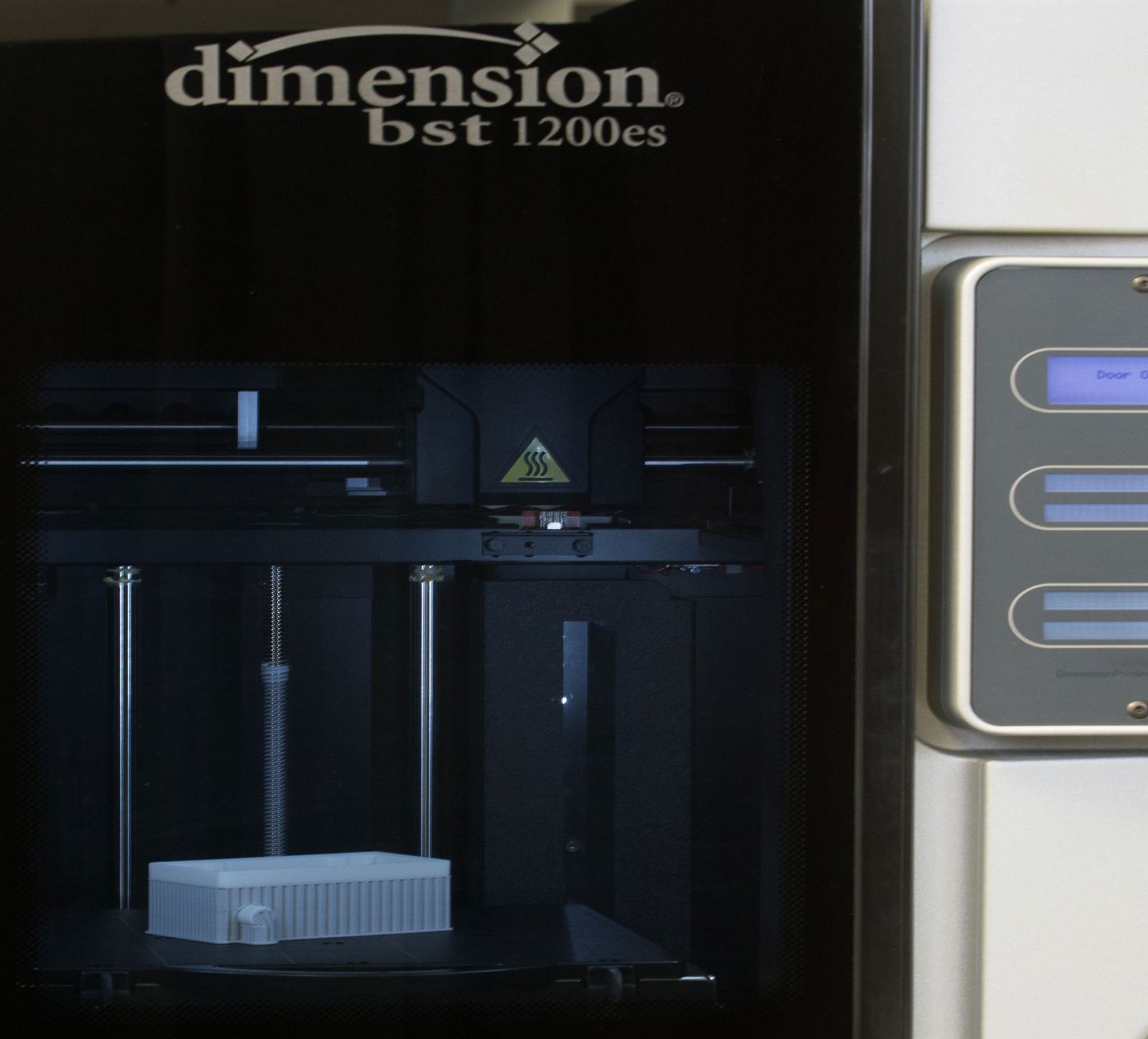
| 3D printing (FDM, SLA) | Days; a handful of parts | Form, fit, assembly sequence, ergonomics | Strength, snap fits, anything material-dependent — wrong resin, anisotropic build |
| Machined prototypes | Days to weeks; ones and tens | Real resin properties in the right geometry | Molding effects — no weld lines, no molded-in stress, no shrink behavior |
| Prototype / soft tooling | Weeks; tens to low thousands of shots | Real molded parts: moldability, weld lines, sink, gate behavior, true dimensions | Production cycle economics, full tool life, high-cavitation balance |
| Bridge tooling | Weeks to a few months; production-quality parts at lower volume | Sellable parts with production-intent geometry while Class 101 steel is built | Final piece price at scale — cavitation and automation come with the production tool |
What each rung is really for
- Prints buy geometry confidence. Does it fit the envelope, do the parts assemble, does the latch land where a thumb expects it? Answered in days for almost nothing. But a printed snap fit that survives says nothing about the molded one — layer adhesion and resin properties are both wrong, in directions you can't predict.
- Machined prototypes buy material confidence. Cut from extruded or cast stock of the actual production resin, they put real polycarbonate or real nylon in your test fixture. What they lack is process history: no knit lines, no fiber orientation, no packing gradients. Good for stiffness and chemistry; silent on molding-driven failure.
- Prototype tooling buys process confidence. An aluminum or single-cavity steel tool produces genuinely molded parts — the first artifact in the program that can reveal a weld line across a load path, sink over a boss, or a warp tendency you'll fight forever if it gets into production steel. This is the rung that pays for itself most often.
- Bridge tooling buys time. Production-intent geometry, lower cavitation, faster to build. It fills the gap between “design is right” and “high-volume tool is ready,” and it lets you sell while you scale instead of watching a launch window close.
When to skip rungs — and when never to
Climbing every rung on every program is its own waste. Skipping is reasonable when risk is genuinely low: carryover geometry from a proven part, a familiar resin in a familiar wall section, a non-cosmetic, non-structural component. In those cases, moldflow simulation plus a disciplined design review can carry you straight to production steel.
Some features should never skip the molded-prototype rung:
- Living hinges — they live or die on flow orientation through the hinge, which only a molded part exhibits.
- Snap fits and load-bearing latches — weld line placement and molded-in stress decide fatigue life, and neither exists in a print.
- Cosmetic A-surfaces — gloss, gate blush, flow marks, and sink read completely differently on molded plastic than on any prototype process.
- Regulated programs — when validation evidence must come from the real process, molded parts from representative tooling are the starting point, not a luxury.
Prototype learnings are production tool inputs
A prototype tool is only worth its cost if what it teaches gets written into the production tool. Three transfers matter most. First, gate location gets proven, not guessed — you've seen where the weld lines land and confirmed they're out of the load path. Second, dimensions go steel-safe — measured shrink from real molded parts replaces handbook shrink rates, so critical features are cut with metal left to remove instead of weld back. Third, tolerances get realistic — capability data from prototype shots tells you which callouts the process holds easily and which ones were costing money for nothing.
This is also where simulation and steel meet. We run moldflow as standard on new tooling programs, and prototype shots are how the model gets honest: predicted fill against actual short shots, predicted warp against CMM data. Each loop makes the next prediction cheaper to trust.
Where Wise fits — honestly
We're a production and bridge molder, not a prototyping bureau. If you need fifty SLA prints by Friday, a dedicated rapid-prototyping shop is the right call and we'll say so. Where we earn our keep is everything after the print: our engineering team works with customers from concept, helping decide which rungs the program needs, building prototype and bridge tools that teach the right lessons, and folding those lessons into production steel backed by moldflow, scientific molding, and IQ/OQ/PQ validation support when the program demands it. The cheapest mistakes are the ones caught before any tool is cut.
The takeaway
Production steel rewards certainty and punishes guesses. Every stage before it exists to convert a guess into a fact at the lowest possible price — geometry for the cost of a print, material for the cost of machining, moldability for the cost of a single cavity. If you're holding a design and wondering which rungs it needs before steel, send it over — we'll walk the ladder with you and tell you which steps are insurance and which are just delay.