
Tolerances are not specified — they are purchased. Every tightened decimal on a drawing buys tooling iterations, process constraint, inspection time, and scrap risk, whether or not the function needed it. Here is how molding tolerances actually behave, what tight callouts cost, and how to spend precision only where it earns its keep.
Why molded parts aren't machined parts
A machined dimension is cut directly into the part. A molded dimension is produced indirectly: steel is cut oversize, plastic fills it, and the part shrinks toward the number on your print as it cools. That shrink — typically a percent or two, depending on resin — is the source of every tolerance behavior unique to molding:
- Shrink is predicted, not guaranteed. Tool dimensions are calculated from published shrink rates, then proven with first shots. Getting a dimension dead-on may take a steel adjustment — which is why critical dimensions are cut “steel-safe,” leaving metal to remove rather than weld back.
- Shrink varies. Resin lot, moisture, melt and mold temperature, pack pressure, and time all move it slightly. A dimension is not a number; it is a distribution.
- Direction matters. Dimensions across the parting line behave differently than dimensions within one mold half, and glass-filled resins shrink differently along flow than across it.
Materials set the ceiling: amorphous resins like ABS and polycarbonate shrink little and predictably, while semi-crystalline resins like PP, nylon, and acetal shrink more and vary more. If a design needs genuinely tight dimensions, the material conversation and the tolerance conversation are the same conversation.
What tightening a tolerance actually costs
Each step tighter climbs a real cost ladder:
| Tolerance posture | What it demands |
|---|---|
| Title-block / commercial | Standard tooling practice, normal process window, sampling inspection |
| Selected fine dimensions | Steel-safe cuts and tuning loops on those features, capability studies, tighter process window |
| Fine tolerances broadly | More tooling iterations, slower cycles to control pack and cooling, expanded inspection — sometimes 100% |
| Beyond the process | Secondary machining of molded parts, or a different process entirely |
The last row matters: every process has a floor. A tolerance the process cannot statistically hold doesn't get held by inspecting harder — it gets held by sorting, and sorting means paying for the parts you throw away.
Critical-to-function thinking
The fix is not looser engineering — it is aimed engineering. On a typical drawing, a handful of dimensions genuinely control fit and function: a bearing bore, a seal groove, a snap engagement, a mating interface. Those deserve explicit tolerances, capability targets, and inspection. The other ninety percent — overall envelope, rib heights, non-mating surfaces — can live at title-block defaults without any consequence except a cheaper part.
- Classify dimensions — critical-to-function, important, and reference. Tell your molder which is which; it changes how the tool is cut and what gets measured.
- Use datums that match function — measure the part the way it mounts, not the way it sits on a surface plate.
- Tolerance the assembly, not just the parts — stack-up analysis often reveals that one generous tolerance and one tight one beat two medium ones, at lower total cost.
Capability, not promises
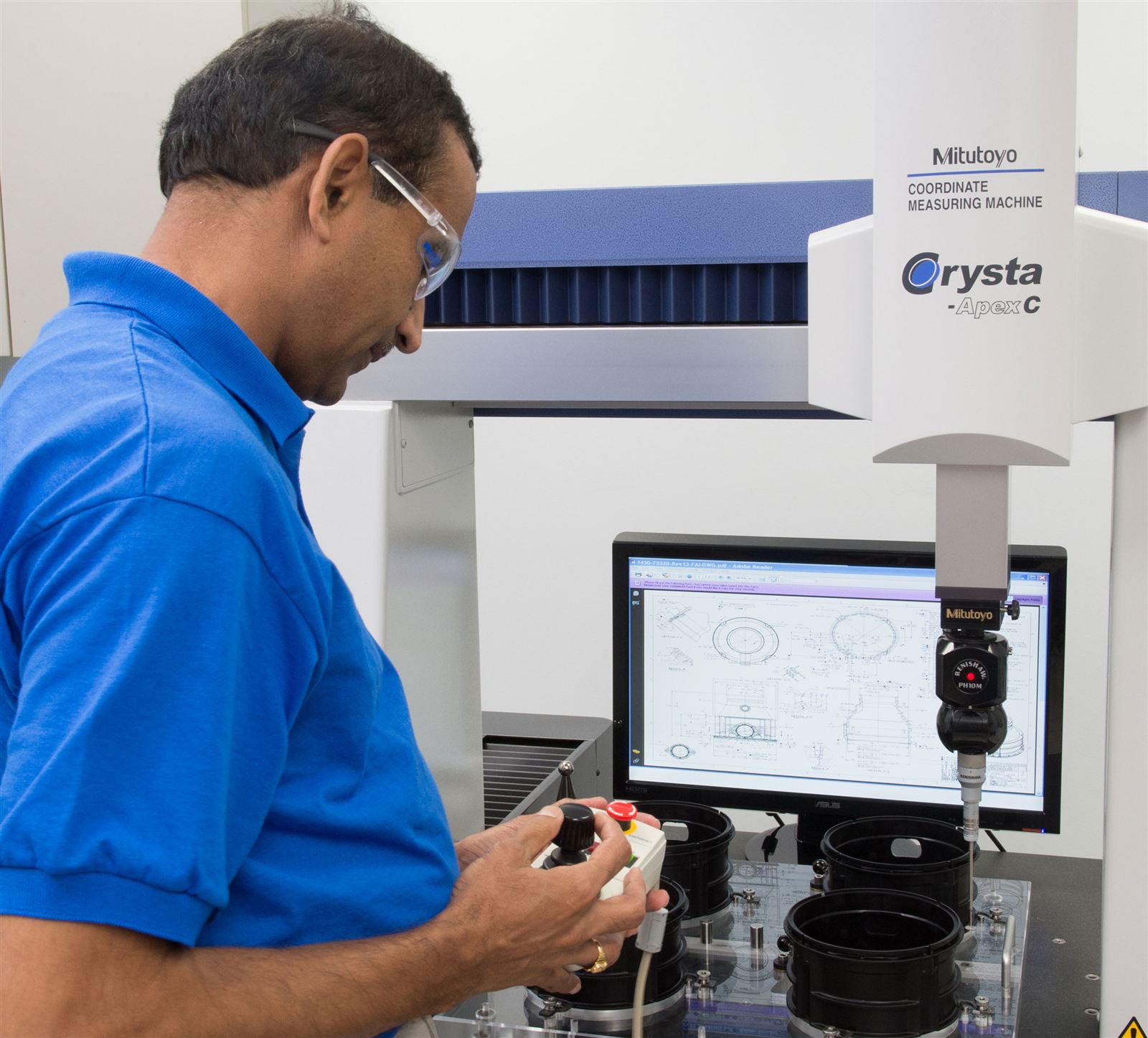
The honest contract between a buyer and a molder is statistical: a dimension is “held” when the process produces it inside the limits with margin — capability indices like Cpk of 1.33 or better, not a lucky first article. That is what scientific molding is for: a documented process window that keeps the distribution centered across resin lots, seasons, and years. It is also what the quality lab is for — first article inspection against every print dimension, then capability studies on the critical ones, run on CMM and vision systems in a climate-controlled room.
The takeaway
Tolerances are a budget. Spent indiscriminately, they buy tooling loops and inspection hours nobody needed; spent deliberately, they buy reliable function at the lowest piece price the geometry allows. The cheapest time to have that conversation is before the drawing is final — send us your print and we'll tell you which dimensions are doing real work, and which ones are just costing you money.